GASTROClear

Discover more about GASTROClear

Find out more about the team behind GASTROClear, the world’s first approved* molecular blood test for early detection of gastric cancer.

* CE IVD marked and approved for IVD use by Singapore’s Health Sciences Authority

The GASTROClear team

GASTROClear, the world’s first molecular blood test for early detection of gastric cancer, is the result of an international collaboration involving researchers and clinicians from Singapore and Korea, led by the Singapore Gastric Cancer Consortium (SGCC).

Beginning in 2012, the collaboration involved large-scale clinical studies carried out at the National University Hospital (NUH) and Tan Tock Seng Hospital in Singapore, as well as the Yonsei Cancer Center in Korea. The Agency for Science, Technology, and Research (A*STAR), National University of Singapore (NUS), and Mirxes were also involved in the development and validation of the test, and in the subsequent regulatory approval and commercialization of GASTROClear as an in-vitro diagnostic test.
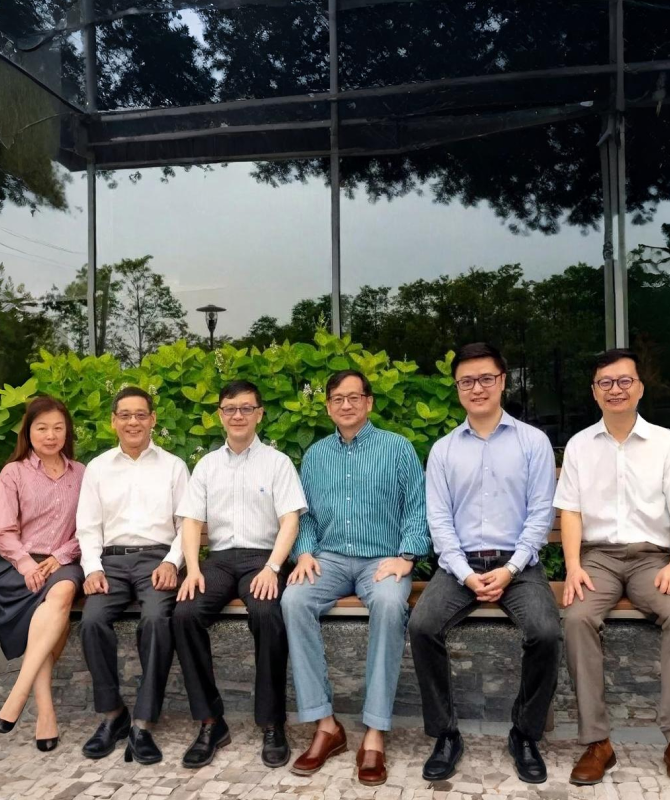
Team

GASTROClear Research Team and Project Leaders

Dr Sidney Yee
Dr Calvin Koh
Prof. Jimmy So
Prof. Yeoh Khay Guan
Prof. Too Heng Phon
Prof. Lam Kong Peng
Zhou Lihan
Zou Ruiyang
Partners

Institutions Involved in Developing GASTROClear

Presentation of the team partners of the investigation, with links to the official pages of the institutions that were involved in the GASTROClear team: Singapore Gastric Cancer Consortium, the Agency for Science, Technology and Research (A*STAR), National University Hospital (NUH), Tan Tock Seng Hospital (TTSH), and Yonsei Cancer Center.

Singapore Gastric Cancer Consortium

Agency for Science, Technology and Research (A*STAR)

National University Hospital (NUH)

Tan Tock Seng Hospital (TTSH)

Frequently Asked Questions

Gastric cancer is a disease in which malignant, or cancerous, cells form in the lining of the stomach.

The first signs of gastric cancer are often vague. Specifically, the signs may be heartburn, indigestion, a change in appetite, nausea, and vomiting.

Men are at higher risk of gastric cancer than women. However, the signs and symptoms of gastric cancer are similar for men and women.

Gastric cancer typically causes no symptoms in the early stages of the disease. As the disease advances, the symptoms are often vague and non-specific.

There is no sure way to prevent gastric cancer, but there are things you can do to lower your risk. These include staying at a healthy weight, maintaining a lifestyle with regular physical activity, avoiding or limiting alcohol, and keeping to a healthy diet.

Stomach cancer is curable if detected in the early stages.

Gastroscopy, also known as upper gastrointestinal endoscopy or oesophago-gastro-duodenoscopy (OGD), is a procedure where a tube with a light and camera on it is used to look for any physical changes on the surface of the upper digestive tract.

You are required to fast for at least 6 hours before the procedure to ensure that your stomach is completely empty.

No special preparation is needed for the GASTROClear test, which only requires a simple blood draw.

No. Other tests can suggest that cancer is present, but a confirmed diagnosis is only possible with a biopsy.

Hereditary diffuse gastric cancer (HDGC) is a rare inherited condition associated with an increased risk of gastric cancer. The gene most commonly associated with HDGC is called CDH1. A mutation (alteration) in the CDH1 gene gives a person an increased risk of developing gastric cancer.

Where can you get tested?

The GASTROClear test is available at over 200 clinics and hospitals in Singapore.

Contact

Please fill out the form or reach us anytime in the contact details below.

Name
I Agree