
GASTROClear
Healthcare Professionals: Discover the GASTROClear test
The GASTROClear test provides information to help doctors identify patients who may benefit from detailed medical examinations to diagnose gastric cancer early, before symptoms appear.
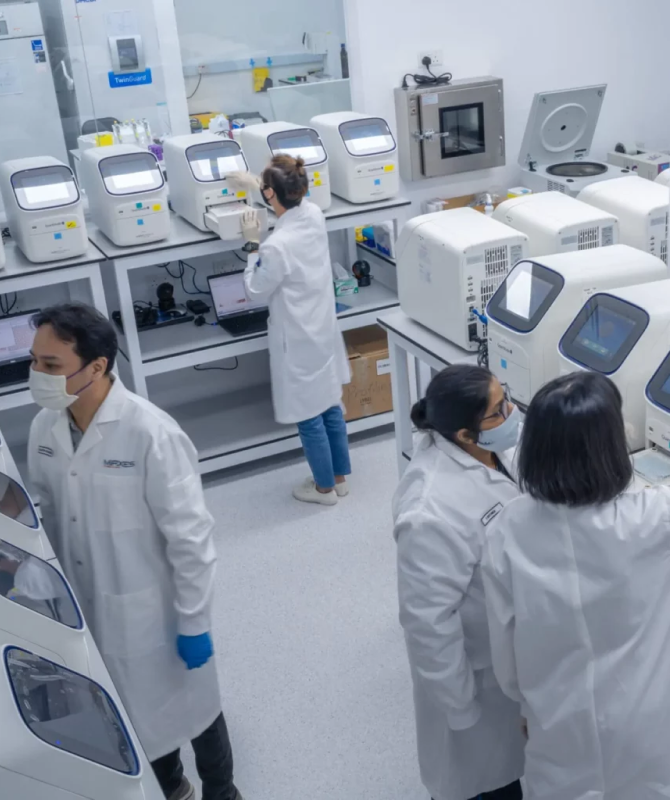
What healthcare professionals need to know about the GASTROClear test
GASTROClear is the world’s first molecular blood test for early detection of gastric cancer. It was jointly developed in Singapore by researchers at the Agency for Science, Technology, and Research (A*STAR), the National University Hospital (NUH), Tan Tock Seng Hospital (TTSH), and Mirxes, a biotechnology company with the mission of saving and improving lives through early, actionable, and personalized diagnoses.
The assay has been rigorously validated, and the clinical evidence for GASTROClear has been peer-reviewed and published in the leading medical journal, Gut, in 2020. GASTROClear is CE marked and has been approved for in-vitro diagnostic use in Singapore by the Health Sciences Authority (HSA) since 2019.
* CE IVD marked and approved for IVD use by Singapore’s Health Sciences Authority

How can GASTROClear help patients?
GASTROClear detects cancer-associated microRNA biomarker signatures that are present in a person’s blood before symptoms appear. It is a minimally-invasive blood test that detects all stages of gastric cancer (stages 1–4) with close to 90% sensitivity. The GASTROClear test gives a risk score together with actionable recommendations for physicians to manage patients who are assessed to be at high, moderate, and low risk of gastric cancer.
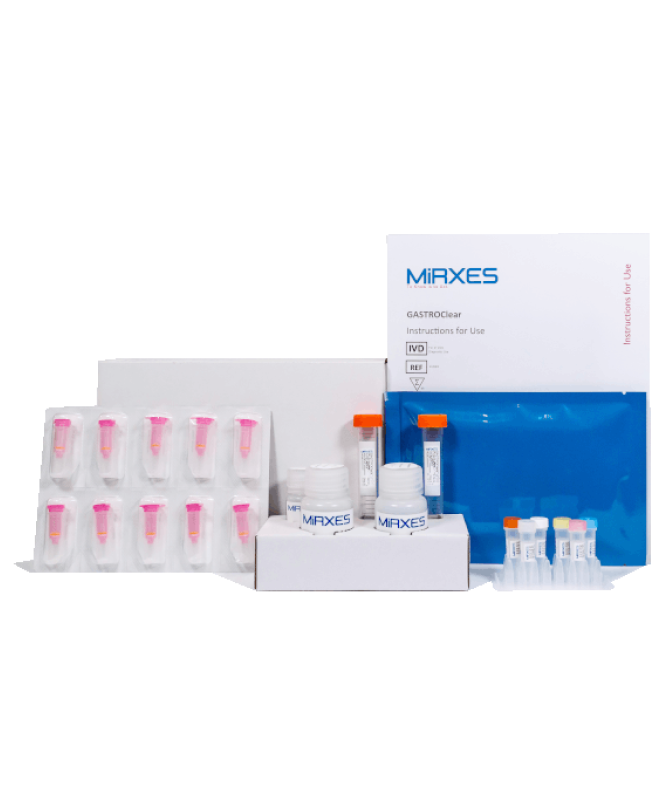
What is the science and evidence behind GASTROClear?
GASTROClear measures microRNAs, the smallest strands of genetic material that bind to and degrade RNA transcripts of protein-coding genes. These molecules help to regulate the function of genes, which makes them important to regular biological processes of cells in the body. Abnormal levels of microRNA are associated with cancer and other diseases, forming a disease signature that can be an important biomarker for detecting problems when they are less serious and more treatable.
GASTROClear uses a PCR-based technology, patented by Mirxes, together with a clinically-validated algorithm to detect a unique signature of 12 microRNAs that have been associated with gastric cancer. The assay was developed and validated through large-scale clinical studies in Singapore and Korea involving over 5,000 people. The assay achieved a sensitivity of 81–82% and specificity of 88–90% in case-control cohort studies, and a sensitivity of 87% and specificity of 68% in a prospective validation cohort comprising high-risk, symptomatic patients who were indicated for gastroscopy.
Direct comparison with other blood-based biomarkers, such as Helicobacter pylori serology, serum pepsinogen, and other tumor markers, showed that GASTROClear was at least 20% more accurate in detecting gastric cancer.

How do you order the GASTROClear test? (For Healthcare Professionals only)
Doctors and clinics can order the GASTROClear test from our partner labs or directly from M Diagnostics, (a clinical diagnostic lab located in Biopolis, Singapore).
Blood samples can be collected from clinics at the following timings:
Monday to Friday: 9:00am to 4:00pm
Saturday: 9:00am to 1:00pm
Sunday/PH: No collection
Want to start ordering GASTROClear for your patients?
Please email hello@mirxes.com to enquire about ordering GASTROClear for your lab or clinic.
FAQs for Healthcare Professionals
What is GASTROClear?
GASTROClear is the world’s first molecular blood test approved for use in early detection of gastric (stomach) cancer. It is an in-vitro diagnostic (IVD) test intended to be used in conjunction with gastroscopy for detection of gastric cancer.
Does GASTROClear replace gastroscopy?
No. GASTROClear is an adjunctive test that is intended to be used in conjunction with gastroscopy and other test methods in accordance with recognized clinical guidelines. It is NOT intended as a replacement for gastroscopy.
Can GASTROClear be used as a standalone test for diagnosis of gastric cancer?
No. GASTROClear is not intended for use as a standalone diagnostic test. Gastric cancer is clinically diagnosed through gastroscopy or imaging tests, such as barium X-ray or CT scan, and histopathological examination.
Who should be tested with GASTROClear?
As an in-vitro diagnostic test, GASTROClear is intended for adults of either sex who are 40+ years of age and at average risk of having gastric cancer with any one of the following risk factors:
- Family history of gastric cancer.
- A history of Helicobacter pylori (H. pylori) infection.
- A history of stomach lymphoma and stomach polyps.
- Long-term stomach inflammation (chronic gastritis).
- Diet containing large amounts of fried food, smoked foods, salted fish, processed meat, and pickled foods.
- Diet containing nitrites and nitrate substances commonly found in cured meats.
- Diet low in fruits and vegetables.
How accurate is GASTROClear at detecting gastric cancer?
GASTROClear has been verified to have 82% sensitivity and 88% specificity for detecting gastric cancer in an asymptomatic, average-risk Chinese and Korean population.
In a symptomatic, high-risk Singaporean population, GASTROClear had sensitivities of 87.5% for stage I gastric cancer and 89.5% for stage II, at 68.4% specificity.
Why is gastric cancer screening important?
The purpose of screening is to detect gastric cancer, if any, at an early stage so that treatment can begin as soon as possible, thus improving the chances of survival.
Why should an average-risk population undergo early screening for gastric cancer?
How does GASTROClear work?
What is microRNA or miRNA?
microRNAs or miRNAs are biological molecules that have important regulatory functions in normal human cells. However, because they are important for normal functioning of the human body, abnormalities affecting the quantities of miRNAs in the body can lead to many diseases, such as cancer.
How does GASTROClear use miRNA to determine gastric cancer risk?
Cancer patients exhibit changes in miRNA composition and quantities compared with healthy individuals. Differences in miRNA profiles have been observed in different cancer types and in different stages of the same cancer. Healthy people have a healthy miRNA signature, while people with gastric cancer have a gastric cancer-associated miRNA signature that we have identified through years of research, starting in 2012. From this research, we developed the GASTROClear panel of 12 miRNA markers that can be used for accurate detection of gastric cancer. We have evidence from large-scale clinical validation studies that GASTROClear can accurately assess a person’s risk of having gastric cancer at the time when blood is drawn for the test.
Where do the miRNAs come from?
The miRNAs detected may be secreted into a patient’s blood by cancer cells or by other cells affected by the cancer. These gastric cancer-associated miRNAs may be involved in the process of gastric cancer formation. For example, they may have functions in regulating inflammation, proliferation, invasion, and angiogenesis. We can assess the risk that a patient may have a gastric tumor in their body by measuring the quantities of these miRNAs in the patient’s blood.
What technology does the GASTROClear test use to detect miRNA?
GASTROClear uses a RT-qPCR (reverse transcription quantitative polymerase chain reaction) technology with a highly controlled workflow to detect and quantify miRNAs.
Have the 12 miRNAs included in the GASTROClear panel been shown to play a role in gastric cancer development and progression?
Some of the miRNAs have been shown to promote cancer metastasis and modulate tumor immune environment, but additional research studies are required to elucidate their roles in gastric cancer development and progression.
What is the scientific evidence that GASTROClear is accurate?
The clinical studies pertaining to the development and validation of the GASTROClear test have been peer-reviewed and published in Gut, a leading international medical journal. The scientific paper can be accessed here:
https://gut.bmj.com/content/early/2020/10/07/gutjnl-2020-322065
Who developed the GASTROClear test?
GASTROClear was developed by an international team comprising clinicians and researchers from the Singapore Gastric Cancer Consortium, the Agency for Science, Technology and Research (A*STAR), National University Hospital (NUH), Tan Tock Seng Hospital (TTSH), Yonsei Cancer Center, and Mirxes.
Is the GASTROClear test approved for use in Singapore?
GASTROClear has been approved for in-vitro diagnostic use by the Health Sciences Authority. It has been included in the Singapore Medical Device Register since May 2019:
https://eservice.hsa.gov.sg/medics/md/mdEnquiry.do?action=getDeviceInfo&devId=C502131B1411-19
Is GASTROClear recommended for gastric cancer screening by Singapore’s Ministry of Health (MOH)?
There are currently no MOH recommendations for gastric cancer screening in Singapore. The only countries that have currently implemented national gastric cancer screening using gastroscopy and/or X-ray are Japan and South Korea, which have high incidences of gastric cancer. GASTROClear is designed as an adjunctive test to identify high-risk individuals for gastroscopy screening, as a cost-effective strategy of mass screening in countries like Singapore which have intermediate-to-high gastric cancer incidence. Further data from post-market and health economics studies may lead to future recommendations for use of GASTROClear and gastroscopy in mass screening.
Who can order a GASTROClear test?
GASTROClear is an in-vitro diagnostic test which must be ordered by a medical professional for a patient meeting the criteria for testing.
Do patients need to fast before blood collection?
No. Patients can have their blood drawn 2 hours after a meal. It is recommended that they do not drink alcohol, smoke, or eat pickled food for at least 1 day before blood collection.
What is the difference between GASTROClear and other available gastric cancer markers?
GASTROClear can specifically detect and assess the risk of early-stage gastric cancer by quantifying miRNAs. Conventional gastric cancer protein markers, such as pepsinogen 1 (PG1), pepsinogen 2 (PG2), and gastrin-17 (G-17), specifically detect atrophic gastritis rather than gastric cancer. Although atrophic gastritis sometimes progresses to gastric cancer, many patients with atrophic gastritis will not develop cancer. Tumor markers such as CA72-4, CEA, and CA19-9 are also commonly used to detect various cancers, but they also have low sensitivity and are not suitable for detecting early-stage gastric cancer. Our published research shows that GASTROClear is around 20% more accurate than any other conventional blood-based biomarker tests for gastric cancer detection.
What is the difference between GASTROClear and other liquid biopsy tests for early cancer detection?
Why does the GASTROClear test only detect gastric cancer while other cancer liquid biopsy tests claim to detect multiple cancers?
GASTROClear was developed specifically as a miRNA-based diagnostic test for detecting gastric cancer in conjunction with gastroscopy. GASTROClear is the first such test to be launched, but similar miRNA-based tests for other cancers are also in the pipeline and will be launched once development and clinical validation studies are completed. Eventually, multiple miRNA-based tests will be combined for accurate multi-cancer early detection through one blood draw from a patient.
What is the difference between GASTROClear and gastroscopy?
GASTROClear detects gastric cancer-associated miRNAs that are secreted by cancer cells in the stomach. Gastric cancer develops over an extended period of time. As a result, the amount of secreted gastric cancer-associated miRNAs may change over time as the cancer develops. Therefore, the miRNA test can assess gastric cancer risk based on miRNA quantities at that point in time. In contrast, a gastroscopic examination involves having a medical specialist check the stomach mucosa using a gastroscope. A specialist can visually detect the lesion through the gastroscope if it is sufficiently large. However, gastroscopy is a relatively costly and invasive procedure that requires a specialist to perform it, and patients who should be screened for gastric cancer may refuse to undergo gastroscopy because of these reasons. GASTROClear is not designed to replace gastroscopy—instead, it is a complementary detection technique. However, patients who initially refuse gastroscopy may be persuaded to undergo the procedure if they get a “high risk” result from the GASTROClear test.
What does the GASTROClear test report include?
What are the necessary requirements for the ordering of the GASTROClear test under the Code of Practice?
The GASTROClear test must be ordered by a registered medical practitioner. As Level 1 tests do not pose additional risks as mentioned, the Code of Practice does not impose any additional requirements with regard to obtaining consent or counselling beyond what would be considered good clinical practice in the ordering of laboratory tests for clinical purposes.
Does a “low risk” GASTROClear result mean that a patient definitely has no gastric cancer?
No. A “low risk” test result indicates that the patient’s current risk of having gastric cancer is low compared with the general population. As GASTROClear is not a standalone diagnostic test, the risk score alone does not reflect whether the patient has gastric cancer or not, nor the extent of the disease. Gastroscopy and histopathological examination by specialists are needed for clinical diagnosis of gastric cancer.
Does having a “high risk” of gastric cancer mean that a patient definitely has gastric cancer?
Why does the GASTROClear test need to be repeated half-yearly or annually?
Cancers develop over time and GASTROClear can only indicate a patient’s risk of gastric cancer at the time of the test. Patients need to carry out the GASTROClear test regularly to monitor their risk of gastric cancer, especially if they have elevated risk due to other factors such as environment or lifestyle. High- and medium-risk individuals should be screened more regularly than low-risk individuals.
Can a “high risk” GASTROClear result indicate a high risk of other cancers (apart from gastric cancer)?
GASTROClear has been shown to be a specific test for gastric cancer with little, or no, cross-reactivity with other cancer types. A small number of blood samples from patients with kidney and colorectal cancers scored as “high risk” when tested with GASTROClear.
Would a patient with gastritis or other gastric conditions but no gastric cancer have a “high risk” result?
GASTROClear is specifically designed to differentiate between gastric cancer and gastritis, as well as other gastric conditions and pre-malignant lesions. GASTROClear has no cross-reactivity for gastritis.
Can GASTROClear detect gastric cancer before it develops?
More longitudinal clinical studies are needed to study this possibility. In our clinical validation study, 60% of patients with gastric high-grade dysplasia (a pre-malignant lesion which is known to have a high risk of progressing to gastric cancer) scored as “high risk” using GASTROClear.
Can GASTROClear be used to monitor patients with intestinal metaplasia (IM)?
Studies are currently underway by the Singapore Gastric Cancer Consortium to provide clinical evidence for this use of GASTROClear. However, GASTROClear is specifically designed to differentiate between gastric cancer and pre-malignant lesions such as IM. In the discovery and verification cohorts, about 50% and 75% of the non-cancer control patients, respectively, had IM. Similarly, the gastric cancer patients used in these cohorts comprised a mix of people with and without IM. Therefore, there is preliminary evidence that GASTROClear is able to identify gastric cancer from patients with IM, though this has to be confirmed through the long-term monitoring study that is underway.
More longitudinal clinical studies are needed to study this possibility. In our clinical validation study, 60% of patients with gastric high-grade dysplasia (a pre-malignant lesion which is known to have a high risk of progressing to gastric cancer) scored as “high risk” using GASTROClear.
Where can you get tested?
The GASTROClear test is available at over 200 clinics and hospitals in Singapore.